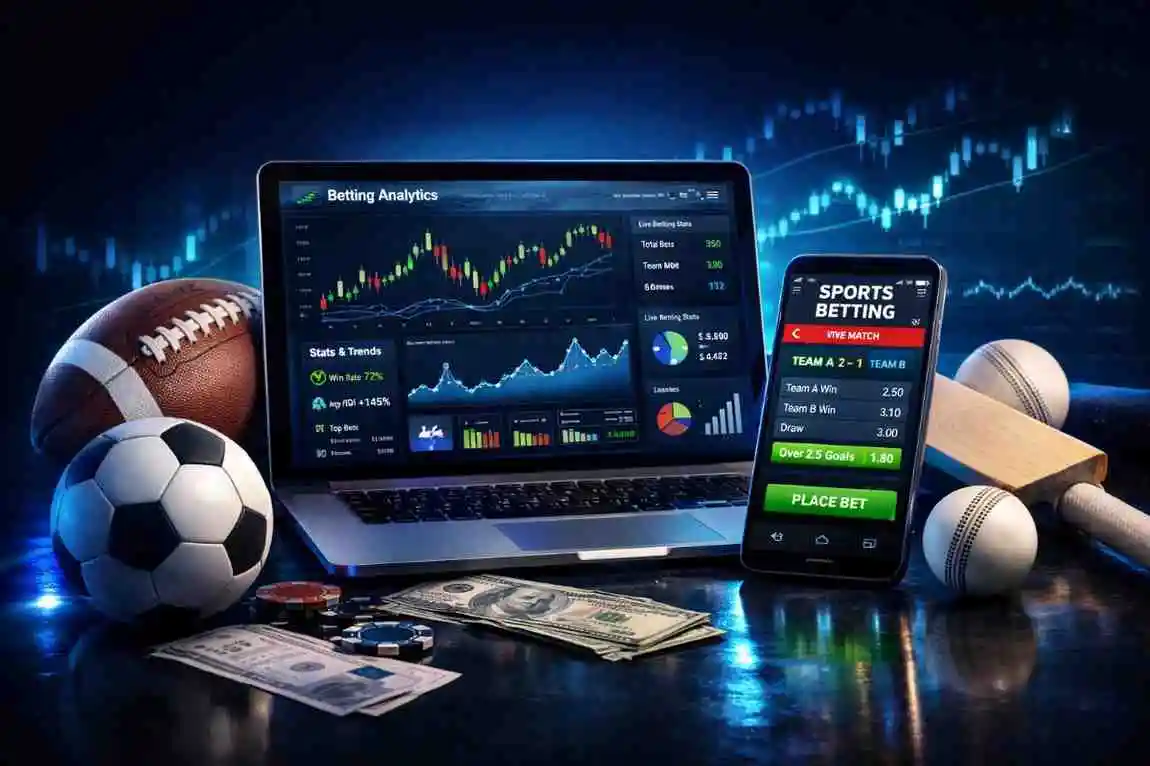
How to Become a Professional Sports Trader
Sports trading is no longer just a hobby for casual bettors. In recent years, it has evolved into a legitimate profession for individuals who understand probability, risk management, and market psychology. A professional sports trader does not rely on luck. Instead, they treat sports markets like financial markets, focusing on price movements, liquidity, and value.
This guide explains what sports trading really is, how it differs from traditional betting, the skills you need, the tools professionals use, and the realistic steps to build a long-term trading career.
What Is Sports Trading?
Sports trading is the practice of buying and selling odds (prices) on sporting events, usually via betting exchanges, with the goal of making consistent profit regardless of the match outcome.
Unlike normal betting, where you place one bet and wait for the result, sports trading allows you to:
- Enter and exit positions before the match ends
- Lock in profit or minimize losses
- Exploit market inefficiencies
- Trade based on momentum and statistics
In many ways, sports trading resembles stock market trading, where prices fluctuate based on demand, news, and performance.
Sports Trading vs Traditional Betting
| Feature | Sports Trading | Traditional Betting |
|---|---|---|
| Goal | Profit from odds movement | Win based on match outcome |
| Risk Control | High (cash-out & hedging) | Low (fixed outcome) |
| Time Horizon | Short-term | Full match duration |
| Strategy | Market-based | Prediction-based |
Why Become a Professional Sports Trader?
There are several reasons why people aim to turn sports trading into a profession:
- Location independence
- Scalable income potential
- Flexible working hours
- Performance-based earnings
- Low startup costs compared to other businesses
However, it requires discipline, emotional control, and continuous learning.
Core Skills You Need
1. Statistical Understanding
You must understand probabilities, averages, variance, and long-term expected value. Trading without math is gambling.
2. Market Reading
Professional traders analyze how odds move based on news, injuries, and public sentiment.
3. Emotional Discipline
Losses are inevitable. Successful traders avoid tilt, revenge trading, and emotional decisions.
4. Bankroll Management
Risking too much per trade destroys long-term profitability.
Essential Sports Trading Strategies
1. Scalping
Scalping involves making small profits from tiny price movements multiple times per match. This strategy relies heavily on liquidity and speed.
2. Swing Trading
Traders anticipate odds movement based on pre-match news and early match performance.
3. Value Trading
This focuses on identifying overpriced or underpriced odds compared to true probability.
4. Arbitrage
Arbitrage involves placing opposing bets across different markets to guarantee profit, although margins are usually small.
5. In-Play Trading
Live trading allows you to exploit momentum shifts, red cards, goals, or injuries.
Best Sports for Trading
- Football (Soccer)
- Tennis
- Basketball
- Horse Racing
- Cricket
Football offers the highest liquidity, making it ideal for beginners.
Tools Professional Sports Traders Use
- Betting exchanges
- Odds comparison software
- Live match trackers
- Statistical analysis tools
- Automated trading bots
- Spreadsheets and record-keeping software
Professional traders rely on data, not intuition.
How Much Money Do You Need to Start?
Most professional traders recommend starting with a bankroll you can afford to lose. A realistic minimum bankroll ranges between:
- $500 to $1,000 for learning
- $5,000+ for serious income generation
Professional trading income scales with capital and skill.
Risk Management Rules
- Never risk more than 2–5% per trade
- Always predefine exit points
- Avoid chasing losses
- Use stop-loss strategies
- Track every trade
Legal and Tax Considerations
Sports trading legality depends on your country. In many jurisdictions, profits may be taxable income. Always consult a tax professional and verify local regulations before trading seriously.
Common Mistakes Beginners Make
- Overtrading
- Ignoring liquidity
- Relying on predictions instead of markets
- Using emotion instead of logic
- Not tracking results
Daily Routine of a Professional Sports Trader
- Market research
- Pre-match analysis
- Trade execution
- Risk management
- Trade review
Consistency matters more than occasional big wins.
High Income Opportunities in Sports Trading
- Betting exchange trading
- AI-assisted trading
- Sports arbitrage systems
- Premium trading signals
- Portfolio-style betting
These niches attract advertisers in finance, fintech, and betting industries.
How Long Does It Take to Become Profitable?
Most traders need 6 to 18 months of learning and testing before achieving consistent profits. There is no shortcut.
Future of Sports Trading
The future includes:
- AI-powered trading algorithms
- Blockchain betting markets
- Faster live-data feeds
- Predictive analytics
- Personalized risk engines
FAQs
Is sports trading gambling?
It can be if done emotionally. Professionally, it is probability-based market trading.
Can I do this full-time?
Yes, but only with sufficient capital, skill, and discipline.
What is the biggest risk?
Poor bankroll management and emotional decision-making.
Do professionals use bots?
Some do, but most rely on semi-automated systems.
Conclusion
Becoming a professional sports trader is possible, but it requires patience, education, and strict discipline. Treat sports trading like a business, not entertainment. Focus on probability, market movement, and risk control rather than emotional predictions.
With the right strategy, proper tools, and long-term mindset, sports trading can become a sustainable income source rather than a risky hobby.